
On June 9, 2026, the 2026 China-Brazil Anti-Cancer Summit, co-organized by China Anti-Cancer Association (CACA), National Academy of Medicine - Brazil (ANM), Brazilian Society of Clinical Oncology (SBOC), and World Association for Integrative Oncology (WAIO), was successfully held. The summit was broadcast live online in both Chinese and English, attracting viewers from China, Brazil, the United States, Uruguay, Portugal, Finland, Sweden, the United Arab Emirates, Saudi Arabia, and other countries.
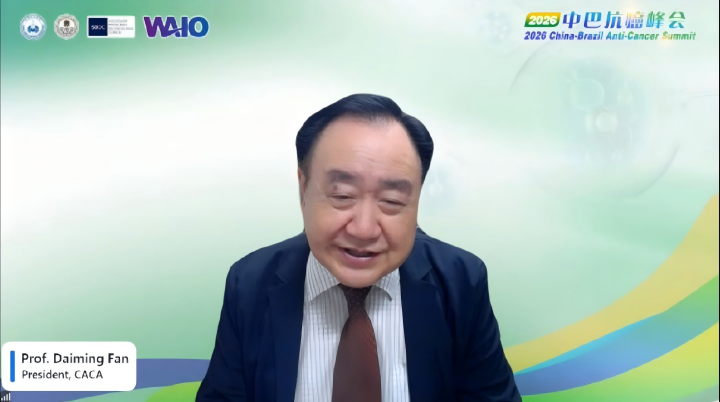
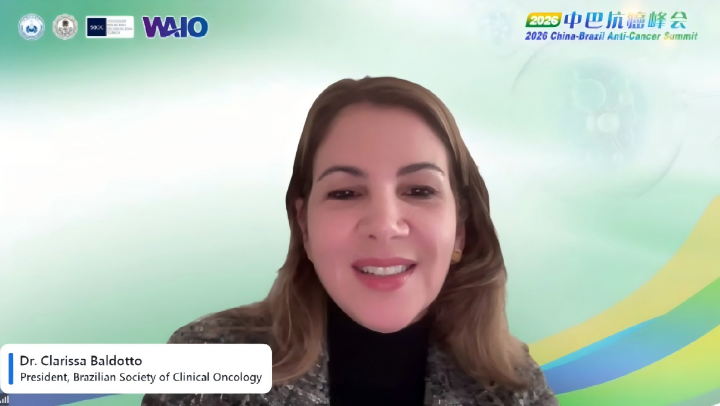
The summit featured opening remarks by Prof. Daiming Fan, President of CACA, President of Asian Oncology Society (AOS), President of WAIO, and International Member of ANM, and Dr. Clarissa Baldotto, President of SBOC, Board Member of International Association for the Study of Lung Cancer (IASLC). The session was co-moderated by Academician Maurício Magalhães Costa of ANM and Prof. Ying Wang, Vice President of CACA.
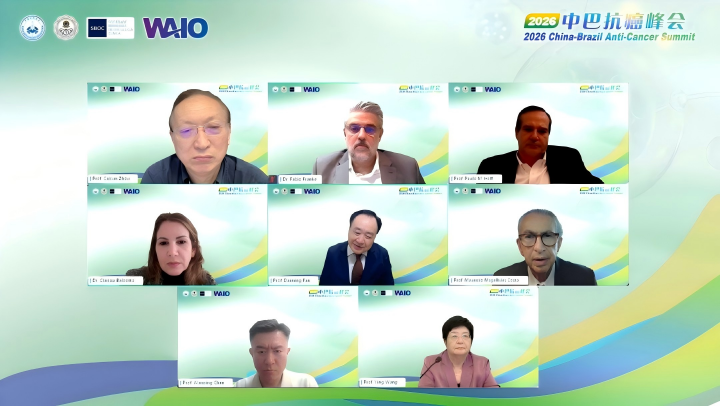
Opening Remarks: Building a China-Brazil Anti-Cancer Cooperation Bridge
In his opening address, Prof. Fan highlighted CACA's achievements in promoting international collaboration, releasing clinical guidelines, and organizing high-level academic conferences. He noted that China and Brazil have a solid foundation for cooperation in oncology, and this summit marked the second such joint event. With the official signing of a collaboration agreement between CACA and SBOC, bilateral cooperation has entered a new phase. To further deepen practical collaboration, a dedicated CACA-SBOC session will be established at the 2026 Chinese Congress on Holistic Integrative Oncology (CCHIO) to be held in Changsha this November. Prof. Fan expressed his expectation for deeper dialogue in academic exchange, mutual learning, and research collaboration.
Dr. Clarissa Baldotto noted that China and Brazil together account for nearly half of the global population and face similar health challenges. She pointed out that Brazil records over 700,000 new cancer cases annually, making cancer a major public health issue. She believes that collaboration between China and Brazil in multicenter clinical research will bring valuable opportunities to improve patient outcomes and advance cancer control. Dr. Baldotto emphasized that the partnership between SBOC and CACA will bring sustained benefits to cancer patients in both countries.
Keynote Speeches: In-Depth Analysis of Clinical Research and New Cancer Burden Data
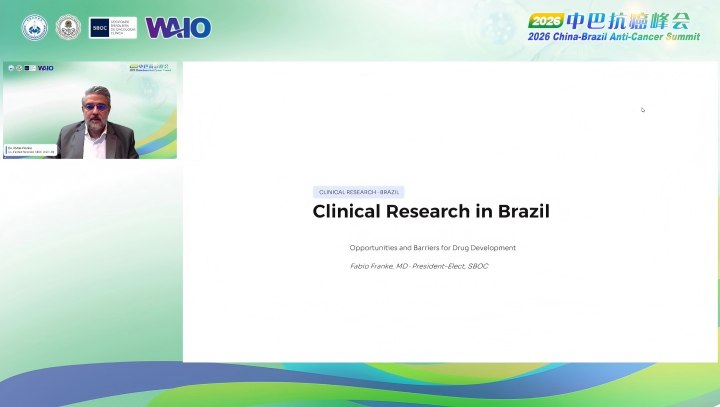
Prof. Fábio Franke, President-Elect of SBOC, delivered an insightful presentation titled "Clinical Research in Brazil: Opportunities and Barriers for Drug Development." He elaborated on Brazil's structural advantages, including population diversity, universal health coverage, and new regulatory frameworks, and stressed that Brazil is on track to become one of the top ten global clinical research markets by 2030.
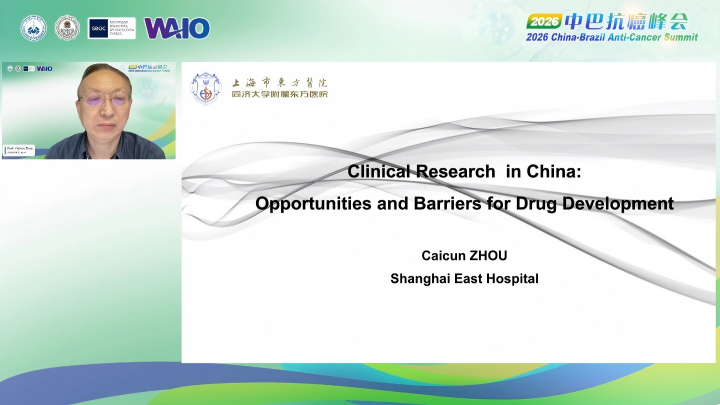
Prof. Caicun Zhou, Director of the Department of Medical Oncology at Shanghai East Hospital (Tongji University), Executive Director of CACA Integrative Lung Cancer Committee, and President of IASLC, presented "Clinical Research in China: Opportunities and Barriers for Drug Development." He systematically analyzed current strengths and challenges in anti-cancer drug development in China and called for joint China-Brazil clinical trials to achieve complementary benefits.
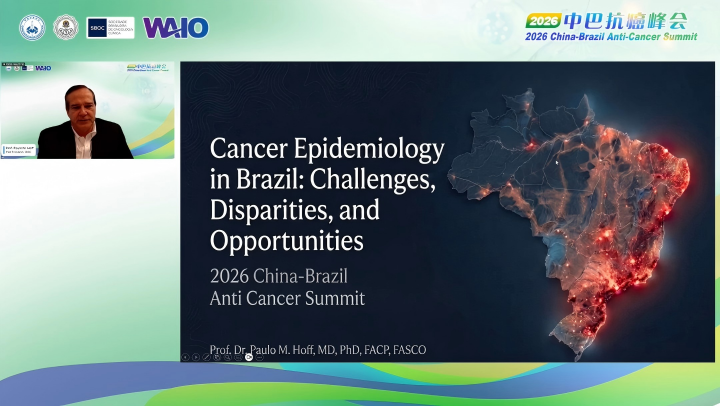
Prof. Paulo M. Hoff, Past President of SBOC and Professor of Clinical Oncology in the Department of Radiology and Oncology at the University of São Paulo, delivered a report titled "Cancer Epidemiology – Brazilian Perspective." He systematically analyzed regional disparities in cancer within Brazil, noting that breast and colorectal cancers predominate in the South and Southeast, while cervical and gastric cancers are more common in the North. He called for strengthened global oncology collaboration to improve drug accessibility.
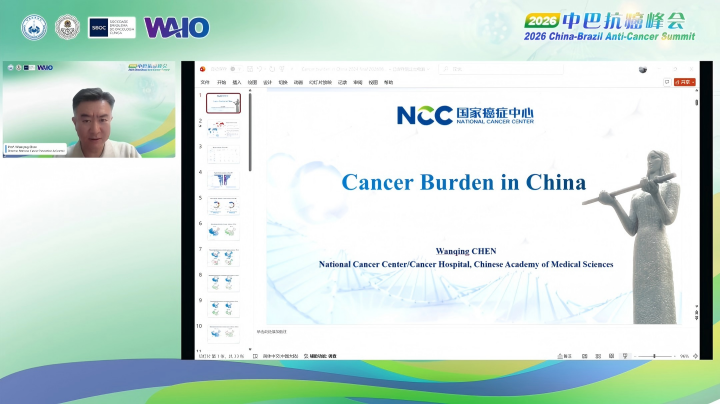
Prof. Wanqing Chen, Director of the National Prevention & Control Office, presented "Cancer Burden in China." He comprehensively showcased the current status of cancer epidemiology in China and the effectiveness of early diagnosis and treatment initiatives, emphasizing the need for an integrated prevention and control strategy to address the rising cancer burden. He noted that China and Brazil have broad opportunities for cooperation in cancer screening, early diagnosis and treatment, and data sharing, and expressed hope for more practical exchanges in this field.
Panel Discussion: Building Consensus for a Global Anti-Cancer Blueprint
The roundtable discussion focused on the future direction of China-Brazil oncology collaboration. Experts agreed that the two countries are highly complementary in terms of population diversity, regulatory reform, and innovative drug development. Prof. Fan pointed out that differences in epigenetics, environmental factors, and tumor development mechanisms between China and Brazil warrant in-depth comparative epidemiological studies to further explore similarities and differences in tumor immunology and other areas. He emphasized that China's research doors are wide open, and closer collaboration should be pursued. Prof. Zhou noted that China possesses a large number of innovative compounds and a mature clinical research system, while Brazil offers unique advantages in studying diverse populations, including Asian and Caucasian groups. He suggested starting with Phase I clinical trials and gradually expanding to Phase II and III bilateral collaborations to facilitate faster approval of innovative drugs in both countries. Prof. Franke and Prof. Hoff also expressed strong willingness to enhance joint research, believing that Brazil's diverse population provides unique value for bilateral clinical studies. Prof. Wang and Academician Costa agreed that the summit fully demonstrated the potential for collaboration in cancer prevention and control between the two countries and looked forward to more bilateral research projects in the future.
Ongoing Collaboration: China and Brazil Join Hands to Advance the Global Anti-Cancer Cause
China Anti-Cancer Association has long maintained good exchanges with its Brazilian counterparts, laying a solid foundation for deepening collaboration. The successful conclusion of this summit marks a new phase in China-Brazil oncology cooperation. Through this in-depth dialogue, experts from both countries gained a deeper understanding of each other's cancer epidemiology and clinical research systems, clarifying complementary strengths and directions for collaboration. The CCHIO Congress in Changsha this November will serve as another new starting point for deepening cooperation between the two medical communities.
Behind the increasingly close academic exchanges lies a reflection of the mutual understanding, friendship, and trust between the medical communities of China and Brazil. This summit not only brings greater hope to cancer patients in both countries but also provides a valuable model for cross-national collaboration in the global medical field. The Association will take this summit as an opportunity to continue expanding practical cooperation in cancer prevention and control, contributing to the building of a global community of health for all.

